How to Read Your Birth Chart
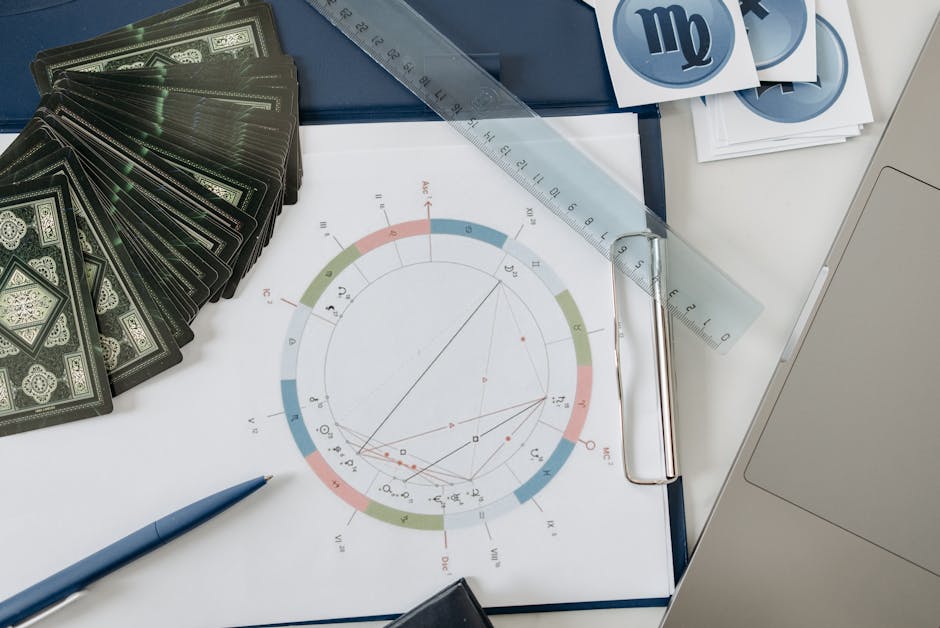
Photo by Pavel Danilyuk on Pexels
What Is a Birth Chart?
A birth chart, also known as a natal chart, is a snapshot of the sky at the exact moment you were born. It maps where every planet and celestial body was positioned relative to Earth, creating a unique cosmic blueprint that astrologers use to interpret personality traits, life patterns, and potential paths.
Unlike your Sun sign (which you read in daily horoscopes), your birth chart is deeply personal. No two charts are exactly alike because even a few minutes’ difference in birth time shifts the planetary positions. This is why two people born on the same day can have completely different personalities and life experiences.
The Core Components of a Birth Chart
Understanding your birth chart starts with four key elements: planets, signs, houses, and aspects. Each plays a distinct role in shaping your astrological profile.
1. The Planets (Your Cosmic Energies)
Each planet represents a different part of your personality:
- Sun — Core identity, ego, and conscious self. This is who you are at your essence.
- Moon — Emotions, instincts, and subconscious reactions. It reveals how you nurture yourself and others.
- Mercury — Communication style, thinking patterns, and how you process information.
- Venus — Love, beauty, values, and what you find pleasurable.
- Mars — Drive, ambition, anger, and how you pursue what you want.
- Jupiter — Growth, luck, expansion, and where you find meaning.
- Saturn — Discipline, responsibility, life lessons, and long-term structure.
- Uranus — Innovation, rebellion, sudden changes, and individuality.
- Neptune — Dreams, intuition, spirituality, and illusions.
- Pluto — Transformation, power, rebirth, and deep psychological patterns.
2. The Signs (How Energies Express)
Each planet sits in a specific zodiac sign, which colors how that planet’s energy operates. For example, Mercury in Aries thinks quickly and assertively, while Mercury in Pisces thinks intuitively and creatively. The twelve zodiac signs are: Aries, Taurus, Gemini, Cancer, Leo, Virgo, Libra, Scorpio, Sagittarius, Capricorn, Aquarius, and Pisces.
3. The Houses (Where Life Happens)
The birth chart is divided into twelve houses, each governing a specific area of life:
- 1st House — Self-image, appearance, and how you present to the world.
- 2nd House — Finances, possessions, and personal values.
- 3rd House — Communication, siblings, and short-distance travel.
- 4th House — Home, family, roots, and emotional foundation.
- 5th House — Creativity, romance, children, and self-expression.
- 6th House — Health, daily routines, and service to others.
- 7th House — Partnerships, marriage, and one-on-one relationships.
- 8th House — Shared resources, sexuality, transformation, and the occult.
- 9th House — Philosophy, higher education, travel, and spirituality.
- 10th House — Career, public reputation, and life direction.
- 11th House — Friendships, community, and long-term goals.
- 12th House — Subconscious, solitude, secrets, and spiritual growth.
4. Aspects (How Planets Interact)
Aspects are the angles planets make to each other in your chart. They reveal how different parts of your personality interact:
- Conjunction (0°) — Planets merge energies. Intense focus, can be harmonious or challenging.
- Sextile (60°) — Flowing, supportive energy. Opportunities come naturally.
- Square (90°) — Tension and challenge. Growth through friction and effort.
- Trine (120°) — Effortless flow. Natural talents and ease.
- Opposition (180°) — Polarity and balance. Requires integration of opposites.
How to Read Your Birth Chart Step by Step
Step 1: Get Your Accurate Birth Chart
You need three things: your date of birth, exact time of birth, and birthplace. Without an accurate birth time, your Rising sign and house placements will be incorrect. Use a free online birth chart calculator or astrology software to generate your chart.
Step 2: Find Your Big Three
Start with the three most personal placements:
- Sun Sign — Your core identity. The sign the Sun was in at your birth.
- Moon Sign — Your emotional nature. The sign the Moon was in.
- Rising Sign (Ascendant) — Your outer personality. The sign rising on the eastern horizon at your birth moment. This is arguably the most important single point in your chart because it determines the entire house system.
Step 3: Identify Your Planetary Placements
Look at which signs and houses each planet occupies. Ask yourself: What house is my Mercury in? This tells you where your mind is most active. Where is my Venus? This reveals your love language and what you value.
Step 4: Examine Your Chart Ruler
The planet that rules your Rising sign is called your chart ruler. It is a focal point in your life. If your Rising is Leo, your chart ruler is the Sun. Look at which house the Sun is in for insight into your life’s central theme.
Step 5: Look for Dominant Elements and Modalities
Count how many planets are in each element (Fire, Earth, Air, Water) and modality (Cardinal, Fixed, Mutable). A strong elemental imbalance — for example, mostly Fire signs with little Water — tells you where your natural strengths and blind spots lie.
Step 6: Analyze Key Aspects
Look for the tightest aspects (smallest degree orb) in your chart, especially involving personal planets (Sun, Moon, Mercury, Venus, Mars). A Sun square Saturn might indicate self-discipline learned through early challenges, while a Venus trine Jupiter suggests natural charm and ease in relationships.
Step 7: Interpret the Houses
The house positions reveal where life events unfold. For example, Saturn in the 10th House often indicates a serious career path with late-blooming success, while Jupiter in the 2nd House suggests financial growth through optimism and risk-taking.
Common Birth Chart Patterns
Some charts have recognizable patterns that experienced astrologers look for:
- Stellium — Three or more planets in the same sign or house. Indicates a concentrated area of focus and intensity.
- T-Square — Two planets in opposition, both squaring a third planet. Creates dynamic tension that drives achievement.
- Grand Trine — Three planets in trine to each other (all same element). Indicates natural talent but can lead to complacency.
- Yod (Finger of God) — Two planets sextile, both quincunx a third. Suggests a fated path or special mission.
Final Tips for Beginners
Learning to read a birth chart takes time. Start with the Big Three, then gradually add layers: planets, houses, aspects. Keep a journal of what resonates as you deepen your understanding. The birth chart is not a fixed destiny — it is a map of potentials. The choices you make are always yours.
Remember that every chart has both strengths and challenges. The goal is not to have a “perfect” chart but to understand your unique cosmic configuration and work with its energies consciously.