Tarot for Beginners: A Complete Guide to Reading Cards
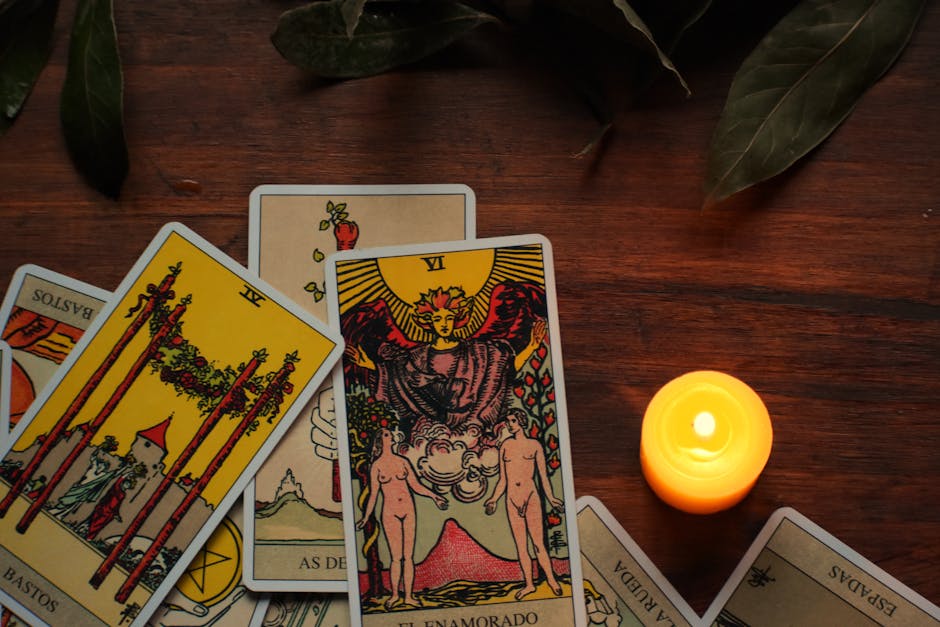
*Photo by Cecilia Miraldi on Pexels*
Tarot reading is one of the most accessible and powerful tools for self-reflection and guidance. You do not need psychic abilities to read tarot. Anyone can learn the meanings of the cards and develop their intuition over time. This guide covers everything a beginner needs to start reading tarot with confidence.
## What Is Tarot?
Tarot is a deck of 78 cards divided into two sections: the Major Arcana (22 cards) and the Minor Arcana (56 cards). Each card carries symbolic meaning that can be interpreted in relation to a question or situation.
Tarot works by tapping into your subconscious mind. The cards you draw are not random — they reflect your inner state and help you see situations from a new perspective.
## The Major Arcana (The Big Picture)
The 22 Major Arcana cards represent major life themes, spiritual lessons, and significant events.
### Key Cards Every Beginner Should Know
The Fool (0) — New beginnings, spontaneity, taking a leap of faith. The Fool represents the start of a journey. When this card appears, you are being called to trust the process and step into the unknown.
The Magician (I) — Manifestation, skill, willpower. You have all the tools you need to succeed. Take action.
The High Priestess (II) — Intuition, mystery, the unconscious mind. Trust your inner voice. The answers are within you.
The Empress (III) — Abundance, nurturing, creativity. A time of growth, fertility, and connection to nature.
The Emperor (IV) — Authority, structure, stability. Build systems, establish order, take control.
The Tower (XVI) — Sudden change, upheaval, revelation. Old structures collapse to make way for something new. This card is not evil — it is necessary destruction.
The Sun (XIX) — Joy, success, vitality. One of the most positive cards. Things are working out.
The World (XXI) — Completion, fulfillment, achievement. A cycle ends successfully.
## The Minor Arcana (Daily Life)
The Minor Arcana consists of 56 cards divided into four suits, each representing a different area of life.
### Cups (Water) — Emotions and Relationships
- Associated with love, intuition, creativity
- Keywords: feelings, relationships, connection
### Wands (Fire) — Action and Passion
- Associated with energy, ambition, career
- Keywords: growth, inspiration, movement
### Swords (Air) — Thought and Challenge
- Associated with intellect, conflict, truth
- Keywords: decisions, communication, mental clarity
### Pentacles (Earth) — Material and Work
- Associated with money, health, career
- Keywords: abundance, stability, practical matters
Each suit has cards numbered Ace through Ten, plus four Court Cards (Page, Knight, Queen, King).
## Simple Spreads for Beginners
### One-Card Daily Draw
The simplest spread. Every morning, draw one card and reflect on its message for the day.
Example question: “What energy should I carry into today?”
### Three-Card Spread (Past-Present-Future)
A versatile spread for any question.
- Card 1 (Past): What is behind this situation
- Card 2 (Present): What is happening now
- Card 3 (Future): Where this is heading
### The Celtic Cross (10 Cards)
The classic spread for detailed readings. Best for in-depth exploration of complex situations.
## How to Give a Tarot Reading
### Step 1: Create a Calm Space
Find a quiet place where you will not be interrupted. Light a candle if it helps you focus. Take three deep breaths.
### Step 2: Formulate Your Question
Clear questions get clear answers. Instead of “Will I get the job?”, ask “What do I need to focus on to improve my chances with this job application?”
### Step 3: Shuffle and Cut
Shuffle the deck while focusing on your question. Cut the deck with your left hand (traditionally the receptive hand).
### Step 4: Lay Out the Cards
Place the cards face down, then turn them over one by one.
### Step 5: Interpret
Look at each card individually, then at how they relate to each other. Notice patterns — multiple cards from the same suit, repeated numbers, or major arcana clusters.
## Journaling Your Readings
Keeping a tarot journal accelerates your learning. Record:
- Date and question
- Cards drawn and their positions
- Your initial interpretation
- How the reading played out in real life
Review your journal monthly to see patterns and track your accuracy.
## Common Beginner Mistakes
- Memorizing every meaning — Focus on card imagery and your intuition first. Meanings come with practice
- Reading for yourself when emotional — Wait until you are calm, or have someone else read for you
- Asking yes/no questions — Tarot is better at exploration than yes/no answers
- Ignoring reversals — Reversed cards (upside down) add nuance. They often indicate blocked or internalized energy
## Conclusion
Tarot is a skill that grows with practice. Start with one-card daily draws, learn the Major Arcana first, then expand to the Minor Arcana. Keep a journal of your readings. Within a few months, you will develop your own interpretations and reading style.
For more tarot guides, spreads, and moon phase resources, visit lunaread.online.
*For more tarot and lunar reading resources, visit lunaread.online.*